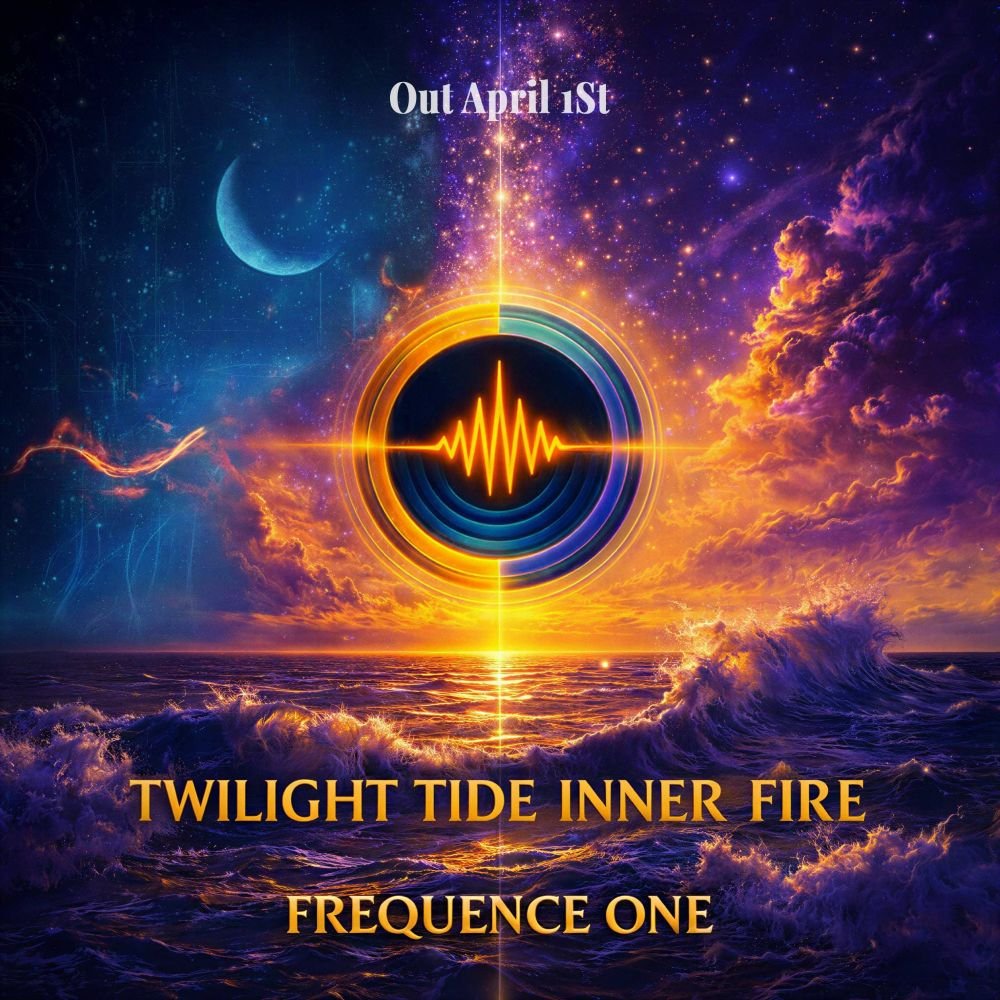
The Alchemy of Sound: Inside the 19-Track Odyssey of ‘Twilight Tide Inner Fire’
Introduction: A New Era of Resonance
In the ever-evolving landscape of electronic music, few projects dare to bridge the gap between the primal and the digital as fearlessly as Frequence One. With the arrival of the highly anticipated album, Twilight Tide Inner Fire, the boundary between the dancefloor and the sanctuary has finally dissolved.
This isn’t just a collection of tracks; it is a 19-track spiritual odyssey. Released in full on April 1, 2026, the album represents years of sonic exploration, blending the ancestral rhythms of the Caribbean and the South American Pampas with the precision-engineered pulse of modern melodic techno.
But what sets this body of work apart? It is the intentionality. From the choice of 432Hz harmonic tuning in atmospheric pieces to the driving tribal house energy of its club-ready anthems, Twilight Tide Inner Fire is a dualistic experience—a journey through the cool, expansive depths of the “Twilight Tide” and the hot, creative spark of the “Inner Fire.”
The Concept: Duality in Frequency
The title itself, Twilight Tide Inner Fire, serves as a roadmap for the listener.
The Twilight Tide
The “Twilight Tide” represents our emotional subconscious—the vast, fluid space where we go to reflect, heal, and dream. Tracks like Kyrie of the Wind and Lucid Drift utilize cinematic textures and ethereal soundscapes to mimic the movement of water and the stillness of dusk. These are the moments where Frequence One leans into the healing power of sound, often utilizing the 432Hz frequency, known as “Verdi’s A,” which is said to align more naturally with the mathematical proportions of nature.
The Inner Fire
Conversely, the “Inner Fire” is the spark of action, the rhythmic heartbeat that compels us to move. This is where the album’s tribal and Afro-Latin roots take center stage. Tracks like Bomba del Espíritu and Isla del Tambor aren’t just rhythmic; they are ritualistic. They represent the fire of creation—the heat that builds when community and rhythm collide on a global dancefloor.
Track-by-Track Analysis: The Heartbeat of the Album
The Global Hit: “Caribbean Resonance”
Currently leading the album’s momentum on global streaming charts, Caribbean Resonance is the perfect entry point into the world of Frequence One. It captures the essence of the islands not through clichés, but through a deep, melodic house lens. The track uses shimmering synth work to represent light reflecting off the ocean, grounded by a steady, hypnotic bassline that ensures its place in sunset DJ sets from Ibiza to Tulum.
The Tribal Ritual: “Isla del Tambor” & “Bomba del Espíritu”
For those seeking the “Inner Fire,” these tracks are the album’s percussive spine. Isla del Tambor (Island of the Drum) is a masterclass in tension and release. It utilizes organic percussion samples that feel “lived-in,” avoiding the sterile feel of modern drum machines. Bomba del Espíritu takes this a step further, infusing the spiritual essence of Puerto Rican Bomba into a techno framework. It is a bridge between generations.
The Spiritual Elevation: “Frecuencia Sagrada”
Translating to “Sacred Frequency,” this track is a testament to the album’s commitment to healing. While many electronic artists focus on volume, Frequence One focuses on vibration. This track is best experienced with high-fidelity headphones, allowing the intricate layers of harmonic frequencies to wash over the listener, clearing the mental “noise” of modern life.
The Science of 432Hz: Why Tuning Matters
A significant portion of the conversation surrounding Twilight Tide Inner Fire revolves around the use of 432Hz tuning. In a world where 440Hz is the standard, Frequence One’s choice to utilize 432Hz for specific tracks is a deliberate act of “Sonic Rebellion.”
Why 432Hz?
- Harmonic Alignment: Proponents of 432Hz argue that it is more in sync with the “Schumann Resonance”—the electromagnetic frequency of the Earth’s atmosphere.
- Reduced Anxiety: Listeners often report that music tuned to 432Hz feels “warmer” and less aggressive on the ears, making it ideal for deep-listening sessions.
- The Frequence One Approach: Unlike other ambient artists who stay exclusively in the “chill” zone, Frequence One applies these principles to Melodic Techno. This creates a unique physical sensation: your body wants to dance to the rhythm, but your mind remains in a state of meditative flow.
Global Influences: From the Pampas to the Caribbean
The album is a travelogue of the soul. Twilight Tide Inner Fire draws heavily from the diverse landscapes of Latin America and the Caribbean.
- Spirit Of The Pampas: This track evokes the vast, open plains of South America. You can hear the influence of folklore instruments and the “galloping” rhythm of the land (Galloping Wild), re-imagined through the lens of a Berlin-style warehouse rave.
- A Criolla Dream: A cinematic piece that feels like a fever dream of the old world meeting the new. It highlights the “Criolla” heritage—a blend of European and African influences that defines much of the rhythmic soul of the Americas.
Why 19 Tracks? The Long-Form Journey
In an era of 2-minute singles and “TikTok-ready” snippets, a 19-track album is a bold statement. Frequence One intentionally designed Twilight Tide Inner Fire to be a long-form experience.
The album is structured like a professional DJ set or a traditional ceremony. It begins with an invitation, builds to a percussive peak, explores the “dark night of the soul” through deep techno, and finally brings the listener back to earth with grounding, reflective pieces like All there ever is.
SEO Insights: How Frequence One is Changing the Genre
For fans of Monolink, Nicola Cruz, and Keinemusik, Frequence One offers a familiar yet distinct alternative. The project fits into several growing SEO categories:
- Organic House / Downtempo: For those who love the natural sounds of the earth.
- Melodic Techno: For fans of the driving, emotional synths found in Afterlife or Anjunadeep releases.
- Spiritual / Healing Music: For the wellness community looking for music that supports meditation without being boring.
How to Experience the Album
To get the most out of Twilight Tide Inner Fire, we recommend three distinct ways to listen:
- The “Twilight” Session: Listen to the first half of the album during sunset. Let tracks like Caribbean Resonance guide the transition from the busyness of the day to the stillness of the night.
- The “Fire” Session: Use the middle section—Tribal Union, One Drop Beat, and Bomba del Espíritu—for movement. Whether it’s a workout, a dance session, or a creative deep-work block, let the fire fuel your output.
- The “Resonance” Session: For those interested in the 432Hz aspect, listen to the album in full during a period of rest. Pay attention to how the frequencies vibrate in your chest and throat.
Conclusion: The Fire is Lit
Twilight Tide Inner Fire is more than an album; it is a manifesto for the modern age. It proves that we don’t have to choose between the ancient and the futuristic, between healing and dancing, or between the tide and the fire. We can have both.
As the full album arrives on April 1st, the global community is invited to step into the resonance. Frequence One has lit the fire—all you have to do is listen.
Frequently Asked Questions (FAQ)
What is the meaning of ‘Twilight Tide Inner Fire’?
The album title represents the duality of human experience: our calm, emotional depth (Twilight Tide) and our driven, creative passion (Inner Fire).
Is the whole album in 432Hz?
While Frequence One is a major proponent of 432Hz, the album uses a variety of tunings to best suit the energy of each track. The atmospheric and healing-focused tracks lean into 432Hz, while the high-energy club tracks utilize 440Hz for compatibility with global DJ sets.
Where can I stream the album?
The full album is available on Spotify, Apple Music, and Tidal starting April 1st, 2026. You can find the curated “Resonance” playlist on our official Spotify profile now.
Who are the influences behind Frequence One ‘TWILIGHT TIDE INNER FIRE?
The project draws inspiration from artists like Monolink, Bedouin, and Nicola Cruz, as well as traditional Caribbean and Afro-Latin rhythmic structures.